Category: Point of View

Our Azenby beacon is always on the lookout for all the latest news, views and happenings in the land of mobile. Here are some of our observations. Spotted anything else out there that we should talk, think and get excited about? Excellent! Drop us an email and let us know.

  • Is Open RAN Finally Open for Business?

    Is Open RAN finally open for busines?

    A bit of history and an explanation of Open RAN

    In the beginning there was the A-bis interface, a GSM standardised interface that was supposed to enable any vendor’s base station (BTS) to connect to any other vendors base station controller (BSC) and vice versa. Unfortunately, the standard and the real-world implementation didn’t quite align, and all the GSM vendors implemented a semi-proprietary version of A-bis and thus Operators had to purchase their BTS and BSC from the same vendor. The only way of introducing competition was through geographic division of networks to vendors. The same happened in 3G with the IuB interface (Node B to RNC).

    This meant less competition at the component level but at least there were several vendors touting their wares including: Nokia, Ericsson, Lucent, Alcatel, NEC, Nortel, Siemens and in the Asian markets Huawei and ZTE.

    However, wind forward quite a few years and after considerable network vendor consolidation the competitive marketplace consists of far fewer players. Allied to this, western governments are mandating the removal of Chinese manufacturer’s equipment thus reducing the competition even further in the West.

    The saviour for the Operators could be Open RAN (O-RAN), let’s explore what O-RAN is and look at a similar initiative from days gone by.

    I must admit a few years ago I was a bit of a cynic when I heard that O-RAN was starting to gather momentum. I recalled initiatives like OBSAI (Open Base Station Architecture Initiative) which was a trade association created by Hyundai, LG Electronics, Nokia, Samsung and ZTE in September 2002. This initiative aimed to open the market on radio base station products by defining a modular structure for base stations, defining the standard modules and the interfaces between them, with a view to being able to mix and match modules from different vendors in the same base station. I was sceptical that this would fly as in effect it would potentially decrease the cost of the equipment that the very same vendors signed up to this initiative were supplying and increase competition between them. Unfortunately for the Operator community (purchasing these products) this initiative didn’t take off and the sight of a multi-vendor base station with modules from different vendors all seamlessly working together never materialised. Maybe the inter-operability was just not achievable or maybe it was being driven by the wrong founders?

    O-RAN sits under the O-RAN alliance which was formed a full 16 years later in February 2018 by AT&T, China Mobile, Deutsche Telekom, NTT DOCOMO and Orange – note the lack of vendors in the founding community. O-RAN Alliance’s mission is to “re-shape the RAN industry towards more intelligent, open, virtualised and fully interoperable mobile networks.” Their website quotes three main streams:

    • The specification effort => extending RAN standards towards openness and intelligence
    • O-RAN Software Community => development of open software for the RAN (in cooperation with the Linux Foundation)
    • Testing and integration effort => supporting O-RAN member companies in testing and integration of their O-RAN implementations

    What the O-RAN initiative has done is effectively created the concept of three main building blocks:

    • the Radio Unit (RU)
    • the Distributed Unit (DU)
    • the Centralised Unit (CU)defined 

    The RU is where the radio frequency signals are transmitted, received, amplified, and digitized. The RU is located near, or integrated into, the antenna. The DU and CU are the computation parts of the base station, sending the digitalised radio signal into the network. The DU is physically located at or near the RU whereas the CU can be located nearer the Core.

    O-RAN is “opening” the protocols and interfaces between these various building blocks (radios, hardware and software) in the RAN with 11 different interfaces defined including those for:

    • Fronthaul between the Radio Unit and the Distributed Unit
    • Midhaul between the Distributed Unit and the Centralised Unit
    • Backhaul connecting the RAN to the Core

    This all sounds very similar to OBSAI – standard modules or building blocks with standardised interfaces between them.

    The O-RAN Alliance now has a real cross section of members, alliance contributors and academic contributors including Operators, tier 1 consultants, equipment vendors, IT software providers, IT hardware vendors, universities, and cyber security centres to name but a few – this initiative has a lot of weight behind it.

    So how is O-RAN doing?

    Vodafone announced an O-RAN deployment plan for the UK in June 2021 year – their selected vendors are: Dell, NEC, Samsung Electronics, Wind River, Capgemini Engineering and Keysight Technologies (interesting that none of the big four Radio Access Network (RAN) vendors feature here)  – they will jointly deliver the first commercial deployment of Open Radio Access Network in Europe (1) Vodafone’s initial focus will be on the 2,500 sites in the UK that it committed to O-RAN in October 2020. It is reportedly one of the largest deployments in the world to date.

    This followed another Vodafone announcement in April 2021 regarding the launch of an O-RAN Test and Validation Lab on its Newbury campus to support the developing O-RAN ecosystem for the telecommunications industry. (2)

    One headline that grabbed my attention in October last year (partly because of the grammar I have to say) was “Telefónica CTO Predicts Open RAN ‘Massification’ by 2025” (3)

    Enrique Blanco, CTO at Telefónica, stated that within four years, “if everything is going well, up to 60%, 70% of the total deployment of radios will be done with this architecture,” “We cannot be sitting and waiting. This is not an option. We need to move very fast in trying to change the architecture because it is simple, faster, better, and finally, this is not our main target, cheaper,” he said.

    In November the next O-RAN headline I noticed was “Orange unveils its very own Open RAN lab” (4) 

     “With the creation of an Open RAN Integration Centre, open to our partners worldwide, we want to accelerate the development of an open, intelligent, cloud-based RAN and create a rich Open RAN ecosystem in Europe,” said Michaël Trabbia, Chief Technology and Innovation Officer at Orange. “From 2025 onwards, our ambition is to deploy only Open RAN equipment across Europe.” 

    Another advocate of 2025 being the year that O-RAN comes of age…..

    Also in November 2021 Deutsche Telekom, Orange, Telefonica, Telecom Italia and Vodafone Group pressed for regulatory adoption of five recommendations pulled from a wider Analysys Mason report Building an open RAN ecosystem for Europe to stimulate the open RAN sector to ensure Europe does not lag North America and Asia in the 5G era and beyond. (5)

    Talking about regulatory / governmental ambitions another interesting development in December 2021 was the announcement from the UK Government as follows:

    “The Government is today announcing, together with UK mobile network operators, a joint ambition for 35% of the UK’s mobile network traffic to be carried over open and interoperable Radio Access Network (RAN) architectures by 2030.

    Open network architectures will play a key role in enhancing the security and resilience of the networks that we rely on – now more than ever – to keep in touch and do business. Following recent decisions the Government has made around the use of high-risk vendors and the introduction of the Telecommunications Security Act, it is right that the Government now sets out its ambitions to build a more competitive, innovative, and diverse supply base for telecoms.” (6)

    Interesting that security was at the forefront of their thinking here, but there is also a recognition that the government decisions on Chinese vendors in UK networks has reduced vendor competition. 2030 is a long way off but this is yet more evidence of the building support for O-RAN.

    What about the outlook elsewhere? 

    In December 2021 Heavy Reading produced a white paper for QCT and Intel: “The Outlook for Open vRAN Deployment” this was based upon a survey of operators asking key questions on deployment status and plans.

    The first question in the survey asked mobile operators about the status of O-RAN deployments in their company’s commercial macro network:

    • 18% are deploying now
    • 30% believe they will deploy within one year
    • 51% believe they will deploy within two years 
    • 1% are still investigating.

    This looks very rosy for O-RAN but bear in mind that this finding does not indicate anything about the scale of the deployments.

    Another question looking at reasons why operators want to deploy O-RAN gave the following responses:

    • 25% for faster and greater control of feature development
    • 21% to increase vendor diversity
    • 20% for new service and monetisation opportunities
    • 15% to improve coverage in new and/or marginal geographies
    • 13% due to government mandate (I assume this is associated with removal of Chinese vendors in some territories)
    • 6% for cost saving

    This makes interesting reading with cost saving being at the bottom of the pile (aligning to the view of Enrique Blanco at Telefonica) although I am not aware of which communities were polled in the operators, I’m sure the CFO would put this top of the list.

    What does all of this do to my cynicism and scepticism?

    Well, I personally see a massive difference between the failure of OBSAI and the momentum that is building behind O-RAN. There is no doubt the O-RAN alliance is not just a small gathering of techno geeks pushing a standard or a bunch of hopeful small vendors trying to push their products. O-RAN has become mainstream, just look at Ericsson and Nokia publicising the benefits of O-RAN on their websites. An interesting point was made by Nokia last year by Jane Rygaard, head of dedicated wireless networks and edge clouds, arguing “it will take another year or two to determine which companies will last the pace in developing and rolling out open RAN” while warning about the risk of the technology becoming too fragmented.(7)

    Once this alleged shake out has happened will this mean the traditional big players succeed in continuing to dominate the RAN equipment space or will we finally see new challengers rising to the surface and eating some of Nokia, Ericsson, Huawei and ZTEs pie? The Vodafone trial certainly hints at a move away from the big four.

    Traditionally the vendors have dominated the standards setting for new mobile network technologies (e.g. 3GPP) and thus been able to design standards that meet their needs and enable them to continue to sell premium products in a fairly closed competitive space. Will the formation of the O-RAN Alliance by a set of Operators back in 2018 finally turn the tables on the vendors and allow the Operators to open up the RAN equipment competitive space?

    Personally, I think yes, but I suspect the initial flurry of new O-RAN vendors will eventually lead to consolidation down to those with the largest share of contracts and may even lead to the big four buying them out and closing the market off again.

    What does this mean for customers, will ORAN bring new services or speed up the delivery of existing services?

    According to the ORAN Alliance website “O-RAN standards enable a more competitive and vibrant RAN supplier ecosystem with faster innovation” and “O-RAN based mobile networks improve the efficiency of RAN deployments and operations”Does this mean that innovation in radio networks will speed up to the extent that new features and functionality will enable new services for end users ahead of when they would have otherwise been available? – This is a complex issue as new features and functionality rely on devices (from the mighty Apple and Samsung’s of this world) also being capable and available to support them, if only a small number of O-RAN vendors are pushing these giants to support these features will they get any traction? However, a system which is more affordable and efficient to roll out may mean that areas that currently do not benefit from the most up to date radio network technology may become more affordable to deploy to; for example, rural areas. Coincidentally Vodafone’s UK deployment is to extend 4G and 5G coverage to more rural places across the South West of England and most of Wales, moving into urban areas in a later phase. This potentially means rural customers getting access to 4G and 5G services earlier or where they would not have received them previously.

    So, is Open RAN finally open for business?

    I believe it is albeit at a fledgling stage, OBSAI never really got to the kind of deployment level we are starting to see with the likes of the Vodafone trial and the support and momentum appear to be building more and more across the industry and even in government (in the UK) however, it is still a matter of time to see how the industry shakes out and whether it continues to encourage and support a diverse range of contributors and new vendors in a more open and competitive environment.

    If you are considering O-RAN procurement or deployment in your network then get in touch with our team of highly experienced consultants with many years of specifying, procuring, and deploying new technologies.

    1. https://newscentre.vodafone.co.uk/press-release/vodafone-key-partners-to-build-europe-first-commercial-openran-network/
    2. https://newscentre.vodafone.co.uk/our-network/openran-uk-lab-research-and-development/
    3. https://www.sdxcentral.com/articles/news/telefonica-cto-predicts-open-ran-massification-by-2025/2021/10/
    4. https://telecoms.com/512105/orange-unveils-its-very-own-openran-lab/
    5. https://www.mobileworldlive.com/featured-content/home-banner/european-open-ran-advocates-demand-eu-support?ID=a6g1r000001QI5LAAW&JobID=961544&utm_source=sfmc&utm_medium=email&utm_campaign=MWL_20211118&utm_content=https%3a%2f%2fwww.mobileworldlive.com%2ffeatured-content%2fhome-banner%2feuropean-open-ran-advocates-demand-eu-support
    6. https://www.gov.uk/government/news/a-joint-statement-on-the-sunsetting-of-2g-and-3g-networks-and-public-ambition-for-open-ran-rollout-as-part-of-the-telecoms-supply-chain-diversificatio
    7. https://mobileinsights.mobileworldlive.com/themed-weeks/nokia-plays-waiting-game-on-open-ran-competition/?ID=a6g1r000001QI5LAAW&JobID=954591&utm_source=sfmc&utm_medium=email&utm_campaign=MWL_20211111&utm_content=https%3a%2f%2fmobileinsights.mobileworldlive.com%2fthemed-weeks%2fnokia-plays-waiting-game-on-open-ran-competition%2f

  • What do we want from telecoms in a liberated Brexit era?

    In the beginning, telephone service was very simple. A monopoly service provider provided us with dial tone, and we could call another subscriber (not customer in those days) and talk. Things have changed a lot since then of course, mainly in the last 37 years since telecommunication services were liberated and BT privatised. Another major change is looming. Openreach (the access network arm of BT) tell us that they will switch off the Public Switched Telephone Network (PSTN) in 2025*. That’s nice of them to let us know and be quiet you cynics who say they thought it had already been switched off. Really this has been coming for years and it just means technology dictates that we no longer need a telephone exchange controlling and switching calls between fixed (wired) devices and – as we all hope – we see old copper wires replaced with fibre optic glass. We read that as many as 40% of people in the UK no longer even use their ‘old’ wired phone preferring to use their mobile device or an internet-based voice application. The internet will be the platform for all telecoms in the future and the future is here right now. 

    All this is driven by economics as that old telephone exchange isn’t cheap to maintain and operate and although engineers have worked minor miracles in ‘stretching’ copper to increase bandwidth for data applications, a step function change was needed, and fibre optics fits the bill. Now any licensed operator can provide telecoms services but the cost of putting fibre into homes and businesses isn’t cheap. Without direct financial support from governments (as we seen happening in many parts of the world) the pace of the switch from copper can be slow as a plc has to make the finances work and the capital bill is very high indeed. This is perhaps one reason why the UK lags the rest of the developed world in fibre access. The recent decision by Ofcom to allow Openreach to charge other service providers what they like for wholesale access  – as opposed to the previous capped rate – seems to have given BT a new lease of life and appetite to finally go big on fibre.

    So, this got us thinking at Azenby about what we want from a new modern, liberated, open telecommunications market and from a UK perspective, how will Global Britain shape up outside of the EU?

    I think we need to start by remembering that it was, somewhat perversely, a European collaborative programme largely lead by the UK that led to the first real paradigm shift in global communications, GSM or 2G as it later become known. That all seems like ancient history in the Brexit world, but GSM became the first global standard for mobile communications and is still the bedrock of all mobile services today. 5G can trace it roots right back to GSM. The formation of GSM included the specification of the services to be carried over the technology. That seemed a very natural thing to do for the forefathers of GSM as they were – all bar one – existing PTTs with very much a carrier mindset. 

    The services were simple enough, voice calls, call forwarding, call barring, call waiting, but enough to kick-start the mobile market. There was data service as well called short message service which very few in the mobile operator world believed in at the time and perhaps tells us much about how PTTs viewed new services (or didn’t in this case!). 

    Then the revolution happened. We are still not sure if it was intended or a victim of the laws of unintended consequences. When the work for specifying the next generation of mobile services began, a coming together of global standards bodies happened to create the Third Generation Project Partnership (3GPP). A very good thing it was with an ambition to drive economy of scale in network equipment and devices, both of which were paramount to making mobile affordable and globally accepted. 

    One thing that 3GPP also did though was to decide that the standards group would specify only at the bearer level and that services would be left to the service providers to decide on. This had some merits as it was intended to lead to innovation in new services and allow service providers to differentiate themselves in the marketplace which it clearly did but not from the Mobile Operators.  

     It also meant that no one even thought about how 3G would deal with something as simple as a voice call, after all, a voice call is a service! Cue mass panic in the operator environment and a scramble to try and get voice over IP working.

    Whether this ditching of services was a result of MNOs sleeping on the job at the standards body or part of a greater master plan of which we still haven’t seem come to fruition, the genie was out of the bottle and mobile operators slowly became the dreaded dumb pipe and services were applications provided by others and the rest is history.

    Coming right up to date now our mobile usage is made up of three components. Buying a cellular access bundle, getting hold of a device, and using applications for services. Voice is an application supplied by the mobile carrier but also available through many other apps as well, the mobile device can use other wireless connections and for some users, WiFi is the default as it’s often regarded as free, and with this the relevance of the mobile operator diminishes.

    So, what does all this tell us about what will happen after the great PSTN switch off? Most likely our internet service provider is probably just the access provider, and we use whatever devices and applications we chose. Fixed wireless conversion finally happens. They are both simple transparent access technologies which isn’t how mobile operators and Telcos planned it.

    The big question is what do we, the customer, want from this new era of telecommunications if anyone bothered to ask us? We’ve been thinking about this at Azenby and accepted that the market will continue to be the ‘over-the-top’ model with carriers fighting an access battle and application providers fighting for services and gaining the lion’s share of the revenues. Given the money follows through the services, not the access, it’s no wonder that we are now in the era of the tech giant, and the once almighty PTTs are a way off the top of the food chain. For access we want speed (actually we seem to want to more speed from our broadband than we know what to do with), reliability, universal coverage, and a low price. Access is a commodity following the utility model. We take access for granted because what’s important is the services (apps) we want to use.

    There are millions of apps out there and we are free to pick and choose whatever ones we want. What’s wrong with that? Well, nothing until some become so dominant that they are the de facto supplier of a service and create barriers of entry to new players. The app market also has one very significant trait. We expect apps to be free and herein lies the danger. Free apps come at a price and the price is ticking that box that says we have read the terms and conditions and accept them. Who amongst us actually reads these terms? Have a go; they are often written in legalise, run to thirty pages, and contain links to all sorts of other policies such as the privacy notice. And what if we don’t like the terms? They’re non negotiable so tough luck if you don’t want every search entry indexed, if you don’t want to be profiled and have whatever you do on the app spied on and details about you sold to any old third party. This is the cost of free apps and a whole generation have grown up used to this model, even if few truly understand the implications of it.

    We also see the emergence of the tech giants, who stray into political influence and policy, having little effective regulation. An example of this is the banning of users that expound views which apparently are against the policies of the tech giants, the most notable being ex US president Donald Trump. It may well be that you don’t agree with Trump’s publications (I use that word deliberately to represent a tweet) but equally do you agree with a random set of unelected, executives who are not answerable to anyone being able to muzzle him ? It seems that China has recognised this and is reigning in the power of the Chinese tech giants as we speak. Perhaps this is one case where the West should take a lead from China.

    So, in thinking about what we want in the new era, a trusted, private, and safe environment seems first and foremost but in a market made up of so many players, how will that come about? Maybe the market will evolve or maybe regulators will intervene. We have doubts about both of these either happening or being effective. Perhaps a new type of application provider emerges. Ones with simpler, old fashioned business models that ask us for pay for the service we use rather than making their money from data mining and what they learn about us. Perhaps these players will be more open and honest about the data they want to compile about ourselves, and what they want to do with it. That almost seems like where were before the internet came along but we don’t for one moment suggest we abandon the new technology; we just suggest that the technology be a little more subservient to us the user rather than app developer.

    Covid has shone a bright light on this whole area with internet access and remote working being suddenly thrust into the mainstream, speeding up a longer-term trend and probably knocking 10 years or more off the evolution of flexible working. This accelerates change, not only of the mobile networks who have become essential services providers for increasing numbers of customers but also the over-the-top services providers who are being pulled into the world of controls, responsibilities and regulation that have previously been noticeably absent from their business models. 

    If you would like to spend some time thinking through how we can help you find new revenues in the mobile internet era, why not give is a call.

    * A note for those worrying about the phone in the hall. Old landline phones will still work after the network changes, and no one will need to change their phone number after the switch off. Get ready to plug your phone into your router though. If you have no internet connection (you won’t be alone) Ofcom has told us that you will to be able to buy a ‘simple connection’. We may all need to buy a new battery back-up though because whereas our old PSTN carried on working in a power cut out router at home will not.

  • Duelling and Facebook. Publishing in the 21st Century.

    Life was fraught with unexpected dangers if you were a member of the American elite in the 18th and 19th century, which must have been very frustrating. The bounty of plenty combined with industrial practices had made a cadre of middle class elites as wealthy as kings of former periods (sorry for the sexism, but these were mostly men). It was just a real irritation (and a shocking loss to society at large) that an otherwise comfortable life was punctuated regularly by duels. For example, in the period between 1798 and 1861 the US Navy lost two-thirds as many officers to duelling as it did in combat at sea, including naval hero Stephen Decatur!(1)

    Some 400 years earlier Johannes Gutenberg (2) had super accelerated the Renaissance with the invention of movable type and creation of the book and publishing. The sharing of knowledge and learning came with the unfortunate side effect of the easy dissemination of slander, deformation of character, writings of hate – which led to so many duels. The most famous duel was between Burr-Hamilton in 1804. If Wikipedia doesn’t provide sufficient information I refer you to the musical (3), but in a period of less than 10 year’s Hamilton alone was engaged in more than a dozen affairs of honour – with great statesmen, lawyers, soldiers and diplomats. At last the laws of publishing encoding copyright and libel became manifest. Structure and legal redress in the courts became normal.

    With a new technology, the internet, a new set of unintended consequences have appeared as a canker around the greater good of ubiquitous, open and instant information publication and retrieval. The internet must be applauded for enabling a Somalian student in a refugee camp the same access to mathematics lessons as a GCSE student at Eton (although we’re not for a minute so naive as to expect that to balance up the deficit of silver spoons anytime soon), or allowing citizens of the world to see countries of questionable democracy building nuclear missile sites(4). However it remains the task of society, using the rule of law to make the most of these benefits while minimizing downsides, whether those downsides be trolling, the dark web, sex trafficking etc.

    We might take 1986 as the start of the internet. One major legal definition that has defined the internet as we experience it today is the 1996 section 230 ruling (5), defining the tech giants as platforms not publishers. So the internet regulators of the day took a conscious decision to protect internet platform operators from litigation by providing immunity to online platforms from civil liability based on third-party content. Perhaps therefore  September 8th 2021, 35 years after inception will be seen as a momentous day when lawmakers started to balance the value of the internet, yet address some of the nastier unintended consequences. According to the Registrar (6);

    “Australia’s High Court has ruled that companies running Facebook pages can be held liable for user comments on them, a ruling with severe consequences for any business with a presence on the Mark Zuckerberg-owned platform. In a case brought against a handful of news media publishers Down Under, Dylan Voller convinced judges that the publishers ought to be held liable for comments posted by the general public on their Facebook posts.” 

    During this next decade, and despite the considerable efforts of tech giants like Facebook to exert influence on lawmakers (7) it’s seems certain that the content and platform companies will be judged more as publishers – the direction of governance will only travel in one direction and perhaps Mr Zukerberg and his cohort, by unintended ways will have ‘the power to build community and bring the world together’

    At one level we can’t blame Mark, Facebook and the other leaders of  internet giants for not embracing greater legislation. What billionaire CEO, with $69Billion dollars profit in 2020 would embrace legislature that might spoil the golden egg? 

    Perhaps the real force for change will come from the likes of Vanguard and the Sovereign Wealth funds. After all every puppet has a puppet master. Personally we adore The Government of Norway Pension fund (8); ith a quiet determination – this one institution which owns, 1.5% of the worlds equity ($1.3Trillion dollars in assets, plus or minus a bob or two), elects to invest in carbon neutral strategies and decides not to support cigarette manufactures or arms dealers. Bravo!

    The terrifying comparative example Facebook must address since the 8th September is retrospective legal fines and damages that have bankrupted giant Pharma(9). Purdue, the OxyContin maker whose products is cited for the death of half a million Americans in the last 20 years and the Sackler family are pariah’s. As an ultra long term shareholder of an internet stock, as the pension companies are, the smart, quiet, hidden men and women are no doubt already changing policy in boardroom.

    Even so despite some of the darker sides to today’s internet, we believe it’s benefit extraordinarily outweighs the unintended consequences and even more so in the future if as we predict redress is sought and paid to those who have been unfairly adversely affected by defamation or hate. As an everyman what can we do in this process of bringing accountability for the content that is authored and published on the main tech platforms?

    1. In the ICT industry we can address technical solutions to troll free messaging – these are available now and we hope will become the choice of the majority.
    2. A number of tools already exist to promote balanced news and stop cookie harvesting – these can be made opt in as a de-facto standard
    3. We can start using cookie free search engines and email, and clearing cookies regularly.
    4. Perhaps we can consider using only search engines that provide a balanced set of search results rather than allowing continual self re-inforcement of particularly extreme views
    5. We can highlight to users of our sites that they may not be immune from future prosecution and should consider the content of their posts carefully

    Our industry is in our hands.

    At Azenby we have practical experience implementing technologies and policy across a range of the issues that are covered in this article. Check us out on a cookie free web browser!

    1. https://en.wikipedia.org/wiki/Duel,  https://en.wikipedia.org/wiki/Stephen_Decatur
    2. https://en.wikipedia.org/wiki/Johannes_Gutenberg
    3. https://en.wikipedia.org/wiki/Burr%E2%80%93Hamilton_duel
    4. https://www.economist.com/briefing/2021/08/07/open-source-intelligence-challenges-state-monopolies-on-information
    5. https://www.wired.co.uk/article/section-230-communications-decency-act
    6. https://www.theregister.com/2021/09/08/australia_facebook_comments_liability_ruling/
    7. https://www.techtransparencyproject.org/facebook-attorneys-general
    8. https://www.macrotrends.net/stocks/charts/FB/facebook/gross-profit
    9. https://en.wikipedia.org/wiki/Government_Pension_Fund_of_Norway
  • Are your Network Performance and Quality KPIs really helping your business?

    This is a scene familiar to many a heroic Network Operations Director/VP – and I speak from experience.

    Your boss, maybe the CTO, maybe the COO or CEO even, is setting your departments objectives for the coming year which translate into your own personal objectives and most likely the criteria for an annual bonus. Your boss has done a bit of reading on this, maybe spoken to the Head of Marketing, and decided that network availability should be 99%, dropped calls <2%, average network throughput per customer X and latency Y (fill them in yourselves).

    There are three responses our heroic head of Network Ops can come up with.

    The meek – ‘thank you sir/madam, I’ll do my best…………………’

    The subjective – ‘yes, they seem about right’

    The objective – ‘hang on a minute’

    The objective response is perhaps the brave or foolhardy response career wise, but it is the right one, nonetheless. And the reason is simple enough. A critical question needs to be asked. ‘Who else in the organisation is sharing these network KPIs?’ 

    Now just maybe you are working in an enlightened MNO/MVNO, and the business Key Performance Indicators have been holistically derived and there is evidence of a lot of joined up writing between the various directorates and departments. If you are, you have my congratulations, but my experience tells me that you are in a minority. During my time I have had many meetings and encounters with CTOs, and Network Ops Directors/VP  around the world and one consistent theme I have heard from so many is that network performance metrics are applied only to Tail End Charlie, the long-suffering head of Network Ops. Quite often this assignment, should they decide to accept it, is indeed mission impossible because the true network performance has been set in concrete long before the ops guys and girls get their hands on it.  Here is common mistake number one, network performance comes through design, procurement, and implementation. 

    Ops can only maintain the network to the standard it has been designed and built to. Determining the right network performance indicators need to be the start of the network quality journey, not the end of it. Deciding them last means that the resulting measurements tell you how good the engineering design and build quality is and not a lot about the operational excellence of your Ops team.

    I think that there are three steps to having a set of KPIs that work for a  Mobile Network Operator and Service Provider. One, get them right up front, two, make sure the whole company is signed up to them and thirdly, monitor and report them correctly, taking corrective action when necessary.

    So, what does best practice look like? It does exist and I’ve seen it on my travels (but just not often enough). It should start with the Sales and Marketing department(s). This is step one. They should answer  questions like these:

    • What quality of network do we need to be competitive in our marketplace? This applies to new customer acquisition as well as churn prevention.
    • What price points do we need to hit for profitability? This determines the size and quality of network that the Service Provider can afford to build.
    • What sort of customer experience are we looking for? Cheap and cheerful or Rolls Royce? What does “good enough” really look like?
    • How many customers over what time are we shooting for and what will their various user profiles look like? What do those customers really focus on? This will help with the correct dimensioning of the network which is a crucial component of the end-user experience.
    • Do we want in-building coverage as standard, and what sort of rural coverage is required and how extensive should the footprint be?
    • What services do we want to offer customers now and in the future?
    • This is then all baked into the company business plan and costed accordingly.

    Using the wrong KPI’s can even damage your profits and business, as the outcome may be completely inappropriate!

    I’ll talk more about setting the right targets later in this blog.

    Another common mistake is to adopt what I have often heard  as being called industry best practice and/or a set of performance indicators derived from standards body recommendations. Whilst these are useful they are not a one-hat-fits-all set of KPIs that work for every MNO and in every market. I worked with an operator in a developing market who was the third entrant in the marketplace. The business wasn’t performing very well, and this was put down to the network performance and I was asked to come in and do a review. I discovered that they had adopted a gold standard set of network performance KPIs and they were indeed falling a long way short of achieving them. It was a tough operating environment, many base stations were off-grid, subject to power outages and theft and vandalism, and all the back haul needed to be self-provided. 

    Even the world’s best Ops team were never going to meet the KPI targets that had been set for the Ops team. Here is the relevant point though. The market leader by some distance had network availability of 70%. The target for my client was 98%. Standard textbook target! Although they were well short of their own target they were still outperforming the market leader by some distance. This wasn’t translating into new customer sales though. The market leader was streets ahead in branding, channels, tariffing, and distribution. They were regarded as having poor customer service and people accepted that they were not the best network nor the cheapest, but they were still the dominant market leader. No amount of network performance KPI tinkering was ever going to solve their true market problem.

    The lesson is to make sure your network performance KPI targets are right for your market and not out of a textbook. Marketing should have defined the product, and this should be the standard required for the business to succeed. Having the wrong KPI targets identified from the beginning is a common mistake, as is having too many performance indicators and what makes some of them ‘key’.

    Working through the process for getting the network that the business needs, the Network Engineering department now need to design and dimension it. Here we often hit common mistake number two. The Engineering department gets down to designing the network in detail and before too long is attracting the attention of the CFO and Financial Controller because it looks like its going to cost a bit more to build than the business plan can take. There are three fixes. Downgrade the design (and tell Marketing, who immediately reduce their revenue targets), tell Procurement to get better pricing, and finally take out the luxury items like operating tools and systems and maybe a few less spares (but don’t tell Ops). 

    After an often-tortuous process, a network design emerges, and mistake number two needs to be avoided at this stage before it’s too late. Can the Engineers demonstrate, at least in theory, that the network they have designed can meet the KPI targets – assuming they have been pre-set and agreed. In the case where they haven’t been  set and will be ordained  when the head of network ops arrives on the scene, it doesn’t matter anyway because it’s going to be his or her problem but in a best-in-class scenario, Engineering should be able to show all the link budgets and equipment MTBFs (Mean Time Between Failures) that demonstrate their design will deliver what’s needed. Include in this resilience and  N+1 of critical nodes. I can’t stress strongly enough, the foundations of network performance is by design, not by operation.

    Let us move on the next step in the process and identify another common failing. Procurement. The US astronaut John Glenn, who sadly died recently, was often quoted as saying ‘I felt exactly how you would feel if you were getting ready to launch and knew you were sitting on top of 2 million parts — all built by the lowest bidder……’ 

    Its procurement’s job to get best value for money. They are usually incentivised by how much money they can save in every product and service they buy. They’re generally quite good at it as well. What I rarely see is a procurement department incentivised equally to own part of the network performance – and they need to be. It’s too easy to cut essential operating functions from the procurement specification to reduce the bill but it is a false economy. We know of one Operator who thought that they could the halve costs of infrastructure compared to their competitor, until they discovered that they had built in no redundancy.

    There are at least two other big departments at work in delivering the network. The Property Group who need to acquire the sites for base stations and the Implementation department who build the sites. You’ll will have guessed what comes next. How are they incentivised? Generally speaking, on speed and costs. The property people have a difficult job for sure, we all know that. Acquisition of sites is tough and getting tougher in some markets. Nonetheless, they also have a crucial role in helping network availably. In many MNOs I have worked with, the biggest cause of failure to hit network targets is inability to access sites quickly for repair. How may times have I seen a KPI specifying that faults must be attended to within four hours at a site with no weekend access? Lots is the answer. Next is climb to repair where permits and supervision is required and both take days to arrange. I do know that these are sometimes conditional restrictions in a site lease but let’s at least factor this into a network availability target.

    Meanwhile, as soon as a site is acquired, the implementation teams need to get in and build and install the equipment. Speed is of the essence. Construction quality is often treated as nice to have but lack of it creates problems downstream. Inadequate antenna mountings, microwave dishes that go out of alignment in the wind, poor connectors, badly aligned antenna. Take your pick. Could the Ops team get a credit for every network outage caused by poor build quality? Nice to try! In many cases these activities are outsourced or contracted out to specialists in this field which is often a very sensible and pragmatic solution. In doing this though, make sure the contracts are written so as to achieve the required elements contributing to network performance targets and, crucially, make sure top class contract management is in place.

    At this stage we are approaching the point of hand-over to Operations to bring the sites on stream. In realty they have little choice but to fire up the site because who wants that investment sitting there not earning money. In an ideal world there would be a comprehensive test of the site and some quality controls carried out on build and access. In a lot of networks this is done on a random basis – if at all. I have rarely seen a site sign-off that says this site will perform according to the Company agreed network performance targets. Isn’t that exactly what the testing regime should be all about before  a site is brought into service?

    By now you may think I am letting the Ops team off lightly but they also have a big role to play. Operations is an overlooked science and requires mastery of logistics, mobilisation of staff and third parties, really good people, a great understanding of the network design (well documented in an ideal world) and a good understanding of all the interdependencies when things do go wrong. Yes, network faults happen but rarely is it due to misoperation but no excuses when it is. An essential part of operations is to identify immediately, and before the customer does, any network failure. This is largely the responsibility of a Network Operations Centre and in todays multi technology generation and sophisticated networks having the right and tools and systems is essential. I would say that this is part of the network engineering. Its very hard to retrospectively integrate tools and systems if they are not designed in from day one.

    I do fully appreciate that in many business models some or all of the above functions are outsourced. Today we see virtual networks operators emerging with the complete design, build and operate of the network outsourced – often to the vendor supplying the equipment. In some cases they also supply the financing, so we move into a tricky area here. How much control can the Service Provider exert on a major vendor when that vendor is both gamekeeper and poacher? In scenarios where some or all of the network disciplines are outsourced, links with the design and deployment activities become more remote and more difficult to rectify. This makes the need for a common, and right set of KPIs even more important. The outsourced supplier(s) need to be tied into delivering the performance targets that the business needs.

    I hope I have made the point that response number three from the Head of Network Ops I made right at the beginning, is the right one. Their job is to maintain the network to the quality level it has been designed and built to achieve. No one  can operate it at a higher level no matter what objectives are given to the Ops people. Setting network KPIs are crucial but they only work for the organisation when they are used correctly so let’s move on to what happens next and assume that we do have an across the board set of network performance indicators, and that we have selected the key ones and now we want to use them to monitor company (not just network ops) performance.

    How we use the KPIs to improve business performance is important because surely that is the whole point of having KPIs. I started by saying the performance targets needed to be baked into the whole company ethos. This is true and for this to work it is necessary that each KPI has a detailed definition and explanation. I have seen the same network performance metric measured in five different ways in a single network and different results sent to different parts of the audience. I have even heard it said that Finance need network availability measured this way and Marketing want it measured a different way and the regulator wants is measure in yet another way. Quite extraordinary when you think about it. Get the definitions of each KPI well documented and the methods used for measuring them. It’s never too late to do this, even if you have been running a network for many years this is a good health check. This is important because not only does bad reporting of KPIs trip a business up in terms of its perceived performance versus the customer reported experience, it also can drive opex and capex spend in the wrong places and that is really not what any business wants.

    Examples of this are applying the same KPIs to the busy hour as are used in the night-time low traffic periods. Including planned outages in the availability result when these are done out of hours. Reduced capacity outside the busy hour being included. Do you need the same level of network performance in all cells as opposed to the 20% of cells carrying 80% of your traffic ? Does deep rural coverage need the same performance level as city centres? All of these can result in a lowering of the overall 24-hour network availability, but do you really want to be spending money on the network to improve out of hour performance or very rural coverage when it is hardly noticeable to customers? There is a level of sophistication in the definition of KPIs that is essential to being able to make them work to identify the areas for  business improvement.

    Once the KPIs are the right ones for the business and they are being measured accurately, the last element is the call to action when they are falling below design targets. This only happens when the KPIs are owned by the CEO/COO as they should be. It is no good leaving the KPIs to Ops to manage. This goes right back to where we started. The diligent Head of Network Operations will have persuaded his boss that that these are business targets, not just Ops targets, and that the business needs C level monitoring and ordering of improvement programmes when missed targets are identified.

    Finally, KPIs need to be living metrics. They should evolve with new technology, with network growth and expansion, with new services and last but definitely not least, changing market and customer expectations. If you have the same basic set of network KPIs as you had 10 years ago, maybe with a few new data related ones thrown in, I suspect they are in need of a serious overhaul! Network KPIs need an annual review as part of the annual setting of the company operation plan. When was the last time your company did a comprehensive review of  your KPIs? Be honest!

    At Azenby we can help. It does sometimes help to have an independent third eye looking at the network  KPIs being used in a business, how they are defined, monitored and used. We believe that network performance KPIs are a force for good and should be helping a mobile operator to produce the best network performance that it can, but we have also seen them damage a business because they are not the right ones, are badly monitored and poorly reported. We have 300-man years of experience in engineering and operating mobile networks and if you think you could do with an MOT of your network KPIs, why not get in touch and we’d like to talk it through  with you.

  • SPACs and ICT Investment Opportunities in 2021

    A side effect of the fiscal intervention made by Western governments supporting economies during Covid has been the rise and rise of SPAC’s. For the 99.9% of the population who sensibly are more interested in gardening or the fulminations and machinations of Europe’s top football clubs, SPAC’s, Special Purpose Acquisition Companies, appearance may have been unnoticed. They represent a new way of taking firms public, bypassing what some see as the cumbersome traditional IPO (Initial Public Offering) process. 

    A SPAC consists of a promise to give a management team considerable financial resources with their aim being to gather sufficient assets together to construct a going concern and float it on the market. According to the Economist Magazine (1) some $100bn has been raised between January and April 2021 for the purpose of finding interesting nascent private companies to bring to market. The bringing of Virgin Galactic to market via a SPAC was an early example of this trend in 2019.

    A $100bn of new business is a lot of new business! Or to put it another way before Covid and prior to governmental interventions absence of cash may have been cited as limit for the progressing of a good business – but in a world with SPAC’s, awash with easy money, we have seemingly limitless funds to support good business idea’s.  So in our world of ICT where should we spend some of this money?

    The ICT industry is seen as an interesting market space for SPAC investment. As a senior investment executive said: “the ‘new normal’ in working see’s gains for the ICT industry. Waiting in the lobby for a Zoom call to start will replace waiting on the platform for the 9:05am to Paddington to arrive.” The arrival of SPAC’s is concurrent with a change in our work patterns – and both are a result of Covid. 

    Pulling together the strands from a number of customer conversations we see market opportunity in the following dimensions of the ICT industry:

    Bandwidth everywhere but not where we want it. The internet traffic has moved from the office to the home, from the city centre to the suburb (and village). With working couples both at home Zoom resource contention would be a matter of idle dinner party conversation, if there were dinner parties. A number of suburban bandwidth plays have been made in the past, 4G modems, mesh, discrete fibre solutions and perhaps now 5G modems may be viable, subject to the specific’s of cities town’s and regions. What’s clear said a board member is “The new normal of work will be much more work from home and we have a duty to help our staff be effective in this new way of working“. In summary there’s an expectation that all novel bandwidth solutions will be given extra impetus in 2021 and have better cases for investment. 

    Digital assistants galore. With staff working remotely a renewed interest in Digital Assistant’s and Office Productivity aids may be expected. Some companies have already implemented tools to track white collar work performance at home, although in early implementation these can often be blunt and damage morale. “HR can tell I’m in front of my computer, but they can’t tell which game I’m playing!” as a recent graduate remarked. Tools for aiding efficiency will become more sophisticated and measures of remote working fairer and more discriminating all leading to opportunity in the ICT space.

    Security at the edge.  Away from the office our personal security setting can mistakenly be reset to ‘at home’ rather than warning ‘working at a remote site’. The security issues of a largely working from home workforce will require a new processes and tools for all companies, from the simple (increasing the security training and given more emphasis to the risks of remote work) to the complex specific tools to facilitate secure remote working. 

    Ed Tech and the drop in office. “Where I used to be in the office 4 days a week I suspect after June I’ll be in less than 2 day’s a week” said one board member. …“On the one hand I want to find ICT tools so I can run meetings so all parties can contribute equally, a mash up between Slack, digital and physical whiteboards, Webex and Teams” … “and for the younger staff who most miss those water cooler moments a nice WeWork environment (at the right price!)”. Solutions are being actively sort in ICT for the challenges we now face in the work

    If any of these remarks have sparked thoughts as to how ICT investment will evolve through 2021 please contact us. We’d be delighted to chat! 

    Azenby is a consultancy comprising of seasoned ICT veterans with experience across business case development, project definition and management, and new business venture including due diligence reviews for investment and acquisition

  • Jolly Good Fellow

    This month I was voted in as a Fellow of ETSI – The European Telecommunications Standards Institute. This means my picture joins the great and good on the walls of ETSI, and I’ll have to pass it quickly when I’m there. Fortunately, the best resolution picture they had was of a much younger me, so I’m not sure how I’ll fit in with the others.

    Charles_brookson

    It did remind me of how old, sorry, experienced   I am: My security career started with the ECS Satellite and crypto: Unfortunately, my 1982 patent on Satellites has me as Charles “Bile” Brookson, which means that it does not often come up in normal searches (it’s “Brice”). I then helped make various chips, both conventional ciphers and public key. My last appearance at Crypto in the USA was in 1984, where I showed our PKI equipment, and I still remember the comments that it would never work!


    This turned into using Public Key for X.400, which then morphed into X.509. Yes, it never really worked …. We did a lot of security in those days, hardware fax encryption, high speed (2 Mbps), and PKI and Email. We also helped produce BS7799 which then became that large tome, the ISO 27000 series.

    In the meantime, in 1986, I chaired the Algorithm Expert Group of CEPT to do all the GSM algorithms. This proved to be a lifetime career, as this Group turned into ETSI. So, I had a life in Standards, SMG10 and 3GPP. In ETSI I was there at the start, and decided security was quite fun: (yes, I’m like that!) I was part of ETSI TC SEC, LI, ran a tiny Security advisory body for the ETSI OCG for a few years, and then started ETSI TC CYBER. I felt obliged to chair Cyber for 4 years and became vice chairman for two more. Whilst doing all this, I also found time to chair the GSMA security group for 25 years.

    I’d morphed employers from BT, one2one, and then became a Civil Servant before finally semi-retiring, and helping with old friends at Azenby, and I’m still doing security. I picked up an OBE on the way, which was nice (it allows me to have ceremonies in St Pauls Cathedral).

    So, it’s been quite fun. It was nice to be in at security from the start, and see it evolve into a huge worldwide business: And I’m still playing a small part. I’m pleased lots of people and companies made lots of money on stuff I was involved in, just sorry I missed out.

    I still remember on getting promotion many years ago as a young lad, when my boss, on my return from an interview, said “Charles, that proves that you can fool all of the people all of the time”.  I’ve tried to live up to that mantra.

    I apologise for all the acronyms, they are not important, but you can Google them if you wish!!

    Charles (Eur. Ing. Charles Brookson OBE CEng FIET FRSA)

    https://www.etsi.org/membership/fellows

  • Is the Net Co. Serv Co. split coming for MNOs?

    The news watchers amongst you may have noticed another win for Cellnex recently in Poland 1. So what, I hear you say, Cellnex have been in the news a lot recently. This is true, they have been dashing through the aisles of the MNO supermarkets and filling their proverbial trolly with towers; in February alone announcements on $6.3bn to acquire Altice’s French Towers and €600m for Three Ireland (as part of a wider €10bn deal). It’s not just Cellnex either, American Tower started the year buying Telxius Towers from Telefonica for $9.4 billion. The acquisition included 31,000 existing communication sites, with a commitment to build 3,300 new sites in Germany and Brazil by 2025.

    The MNOs have been busy spinning off tower assets too with Vodafone planning to float Vantage Towers, its European mobile phone masts business, on the Frankfurt stock exchange in March in a share offering worth about 3 billion euros. Orange also announced the launch of TOTEM its European masts company.

    Cellnex’s expansion is reported to get them to over 100,000 tower sites. By comparison American Tower has nearly 200,000 towers globally, Vantage has 82,000 towers whilst TOTEM has 25,500. That’s a lot of towers moving out of MNO hands but there are reportedly still circa 170,000 towers still in MNO hands in Europe.

    All of this is of course very interesting (if you are a tower deal watcher) but why did I start with the Poland deal? Well, this one is a bit different to your average tower deal as it also includes active assets – yes, the very radio network assets that MNOs have kept strict control of ever since their beginnings. Okay, admittedly MNOs have shared active assets between themselves in various installations and network sharing deals around the world but actually giving another party (that is not an MNO) the responsibility for providing all the base stations in your network is a different league of letting go of control.

    In the beginnings of MNO life there was full control of design, plan, acquire, build, operate and maintain – these aspects were all under one roof – the MNOs. Admittedly there were contractors delivering some services in these areas but essentially the MNOs still owned the whole life process of creating and managing networks end to end. Over time contracting became bigger as the MNOs grew, minor works contracts became major programmes contracted out to tier 1 construction vendors and then as more cost pressures continued to be placed upon the MNOs finances and their ever-growing tower/site cost base (and associated resources), larger outsourcing contracts became the next logical step.

    The scope of outsourcing grew beyond build to include operate and maintain as well as some aspects of radio planning. But the provision of the active equipment still sat within the MNO remit, after all, most MNOs are part of a larger group or have been at some stage in their life and so have managed to secure group discounts on active equipment pricing and commitments on vendor roadmaps etc. MNOs still wanted to control the specification and purchase of the active equipment and the associated interaction with the vendors on the design and availability of features and functionality of this equipment. It was seen as fundamental to the control of what was being placed in the network and whether it met the standards required by the MNOs.

    In 2019 TDC in Denmark went a step further than outsourcing and created two companies TDC NET and Nuuday. TDC NET provides the fixed-line connections and the mobile network. Nuuday provides services through a variety of providers such as YouSee, Telmore, Hiper, and TDC Business. This is a classic network company/services company split.

    The Poland set up is similar with a dedicated network infrastructure company Polkomtel Infrastruktura (spun out of the Polkomtel MNO) providing Radio Network infrastructure to the Polkomtel.

    With the above types of operating models, the MNOs can still specify features and functionalities and even a vendor shortlist to retain an element of control but is the emphasis going to shift to specifying what services the MNO wants the network provider to supply them with and the MNO stepping back from tighter control of the active equipment in the radio network?

    With all the activity in the Tower market at the moment and continued pressures on MNOs financially will we see more network companies (Net Co.) emerging in future deals? Are we entering the era of the Net Co. that plans, acquires, builds, operates and maintains all the MNO sites and network assets?

    One could argue that some outsourcing deals with the major equipment vendors that have been placed by the MNOs are pretty close to this scope already but with the exclusion of network assets. And just how much control do you have in an outsourcing deal anyway, indeed how much control should you have for the provider to be successful to innovate and gain synergies from other deals they operate?

    If tower assets have become the norm to handover to third parties and active radio network assets are following, then the NetCo could become the next logical step for the Tower Co. and the MNOs. Okay it’s early days with only a few examples globally and the CEO of Cellnex (Tobias Martinez) commenting on the Poland deal did state “Our expansion into active infrastructure is undoubtedly a qualitative leap and heralds a new reality for the company that broadens the development and growth options for Cellnex in Europe within telecommunications infrastructures “ make of this what you will…..

    If the Net Co. is the next logical step, then where does this leave the MNOs – will they become the service company (Serv Co.) purely providing services leaving the Net Co. to provide the infrastructure? Will the MNOs all become the equivalent of a “Thick MVNO” i.e. have a Core Network but no Radio Network?

    We can see an end state where each country has a national grid of mobile sites provided for all MNOs by a single Net Co; in the long-term having several Net Co’s in each country would not be cost effective. The costs of 5G deployment and the costs of dedicated spectrum may be the catalysts that drive this forward. Much as the MNOs do not want to fully admit it, mobile services have become a utility and a national grid of utility networks is pretty normal in today’s world so what not a national mobile network grid which sells airtime to the MNOs? The Net Co / Serv Co model fits this perfectly…..

    If you need any help in any of the areas covered above please get in touch, at Azenby we have many years’ experience in the helping MNOs, vendors and investors make sense of emerging operating models and trends.

    1 –  (https://www.cellnextelecom.com/content/uploads/2021/02/20210226-Cellnex-to-acquire-Polkomtel-Infrastruktura_EN-2.pdf)

  • All I want for Christmas is…..

    What I’d like to see under the Christmas Tree from the European ICT industry

    Perhaps it’s a function of age but I have noticed that ‘want’ very rarely has any correlation with ‘gets’, most especially when we come to the receiving of Christmas gifts. 2020 has been an especially challenging year, but also a year where the ICT industry has shown both its importance to society at large and one where by and large, actors in the ICT industry have been very successful economically. ICT has been at the forefront of keeping us working, providing some of the infrastructure to support controlling the spread of Covid-19 and shine a light toward the next stage of an everything connected industrialisation, Industry 4.0(1). The people of Europe, through our various governments have also reiterated the strategic importance of ICT, not least by reinforcing vendor choices. This gives our industry, rightly, clout and credibility.

    With such great power of course comes a responsibility, which leads to some humble requests on the Christmas front:

    The end of designed obsolescence: It’s a shame that my trusty iPhone7 is purposely being made obsolete by Apple who prefer to ‘up sell’ me rather than sell me fair and by an industry that’s become entrapped in selling the newest version of mobile phones. Ultimately Apple are seen as a business who’s design philosophy is not compatible with it’s articulated environmental credo (2) and we in the industry are complicit. The consumer has every right to expect a phone that costs more than £1000 to last at least a decade and have a battery that’s easy to replace. For Christmas the ICT industry can lobby European Legislators toward equipment longevity policies and opt for marketing campaigns focused at ‘your investment and your environment is safe with us’. This would be heard by the consumer. I will give a short shout out of support to Virgin in the UK (and Sky with a colleague), who on replacing a router this month committed to reuse the equipment and gave the consumers (us!) a small discount. Bravo! A step in the right direction.

    Terms & Conditions to be no more than 2 pages of A4 (in 12-point font): We all know when we’re being scammed. And if we’re the recipient of 40 pages of closely packed legal gobbledegook(3) I’m certain Facebook, Google, Linked In, Apple and Microsoft to name just a few are actively nudging their customers towards abstaining from reading terms and conditions. Given the credit that our industry has garnered in 2020 it seems sad that we waste a little of that valuable trust purposely obscuring our customers. Since 1979, The Campaign For Plain English (4) has worked to provide easy to read documents and for Christmas it would be great for the European ICT industry to commit all its own and its 3rd party contracts to meeting this standard of plain English. While this could be achieved through legislation, I think it would be positively embraced by customers and have a great positive influence inside the corporation. Atul Gawande’s ‘The Checklist Manifesto’ (5), gives a brilliant example of focusing on the details of minor accidents in the nuclear industry to transform a whole business. When we stop obscuring to our custome’s, I wonder how much power that transparency gives our corporation?

    Great at Integration, Verification & Acceptance, be really good at what we need to be really good at: With 5G, Layered Architecture and IOT upon us and our governments mandating a move away from monolithic Chinese technology solutions as an industry we have a renewed duty to be really good at a number of our core industrial activities; most especially integration, verification and acceptance, which allows us to drive and control the speed of new services roll out. For Christmas a review of the competences that are essential to be excellent core in-house functions would be a great start to 2021. Ultimately the winners in 5G will be those operators that can provide novel new services fast to the market and that requires a renewed enthusiasm for the operational and engineering side of the business.

    I reiterate, the European ICT industry finishes 2020 with a considerable boost in its social standing. Sure, we’re not doctor’s or nurses but to be effective our health workers and our society needs the ICT industry to succeed. With that credit and our unique place in society (after all we’re here licenced by governments to use a common good for the benefit of the citizens) we have great power and an equivalent dollop of responsibility.

    In 2021 we have the potential to leverage our stature to a better place for our customers and all the participants in what is truly a circular economy (6). If now is not the time to act – then when?

    If any of the points in this article are interesting, we’re here to listen and help feel free to contact us. Have a great Christmas.

    1. https://www.forbes.com/sites/bernardmarr/2018/09/02/what-is-industry-4-0-heres-a-super-easy-explanation-for-anyone/
    2. https://www.apple.com/uk/environment/
    3. https://www.dictionary.com/browse/gobbledegook
    4. http://www.plainenglish.co.uk/
    5. https://en.wikipedia.org/wiki/Atul_Gawande
    6. https://www.circle-economy.com/circular-economy/7-key-elements
  • Mobile Coverage Wars are back again

    Those of you with long memories will remember that back in the 1990s the walls in all mobile phone shops were plastered with coverage maps. Coverage was king and the mobile operators all wanted to show the extent of their own mobile coverage and that theirs was the best, widest, deepest, most extensive. Coverage maps are long since gone of course and these days you pop your post code into the operator’s website to see what the predicted coverage will be. Predicted being the operative word here, especially when it comes to indoor coverage. It’s a handy guide but really doesn’t help when what you need to know is how well the mobile device will work in all the places that it will be used.

    We tend to think that coverage is a given these days and we accept that some networks work better than others in some places and not so good in others. This process of self-optimisation tends to teach us the best network for where we use our device the most. The mobile operator advertising pitch has long since moved on from coverage to the latest technology, the data rates, and how much data you can get for your money. But is that all about to change? At Azenby, we think it is.

    5G is here. Hooray. Gosh, the new shiny 5G devices don’t come cheap though do they. £75 per month on two-year contracts or the best part of one thousand pounds for a top end Apple or Samsung device. What do we want for all that money? As consumers we want even faster data rates, we think. We want a better data bundle. What we probably need though is to stream high quality video and not be staring at the spinning circle of hell. We also want this to work inside buildings, whether it be in the home, the office, the coffee shop, the train and bus, or the pub. And here lies the new coverage challenge for mobile operators. 5G has to work inside buildings. Not just for the consumer but also for the business user, the enterprise user and crucially, for IoT applications.

    In building coverage has always been the big challenge for mobile operators but now in the 5G world it is the new battleground where customers will be won and lost. Mobile Operators have hitherto largely relied on their radio coverage prediction tools to estimate in-building coverage but they have done so in the full knowledge that this is an unreliable method as the construction and internal dimensions of buildings vary greatly and therefore the true in building coverage can be very different to that predicted. That is a problem for 5G services buyers. The only way to really know how good in building coverage is means getting into buildings and testing, which is not a cheap exercise and also has logistical problems to overcome as well.

    At Azenby we think the winners and losers in 5G will be determined by who succeeds in providing the best in-building coverage. Not just the best, but really fit-for-purpose 5G coverage. This is not a simple challenge for mobile operators, and some may even leave the in-building problem to others to solve or to rely on WiFi piggyback. We believe those that chose this route will be in the loser’s camp. The new coverage wars, the battle for in-building supremacy, will require new strategies and a new mix of macro and micro layer coverage. It will also require more spectrum of course and in this regard the 5G spectrum at 3.4-3.8 GHz and in the 26 GHz band is a mixed blessing. Yes, it enables services requiring wider bandwidth and for ultra-dense very high capacity networks respectively, but – and this is a very big but – neither band is well suited for penetrating buildings and providing good coverage from the macro network. True, there is some spectrum at 700 MHz and operators can re-farm some of their existing 900 MHz and 1800 MHz spectrum for 5G but 700 MHz is not plentiful and existing spectrum has be managed very carefully to maintain legacy technologies which is where the vast majority of customers are today.

    We have all read the about the exciting prospects for 5G and the new use cases which include not only enhanced consumer experience (enhanced mobile broadband eMBB) but crucially, for 5G investment business cases to stack up, the new IoT applications, Massive Machine type Communications (mMTC) and Ultra-reliable and low latency communications (uRLLC). Not exclusively by any means but certainly the need for rock solid inbuilding coverage will be a mandatory requirement for these devices to have universal appeal and ubiquitous availability.

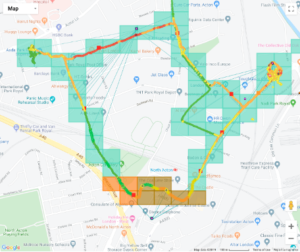
    That’s not to say that 5G stand-alone outdoor coverage is a cinch either. Working with our sister company SignalScore, we have been looking at early 5G coverage at 3.4GHz and the results show that it is almost line-of-sight (between base station and device), Whereas that should come as no surprise to radio engineers, it does emphasise that working with 5G spectrum presents a whole new range of challenges for mobile operators.

    walk roundIn a simple walk round test in London, we found that 5G SA was available for only about 25% of our route and this was in close proximity to the serving cell. For most of the route the device was attached to a 4G bearer.
    Turning a corner was enough to lose 5G and for the device to drop back to 4G.  Although this was a simple outdoor walk test, we think it epitomizes the added difficulties in providing in-building coverage from the macro layer network for mobile operators.

    The dilemma extends beyond that of the quality of service that mobile operators can expect to deliver inside buildings. For us, the users and buyers of services, we really do need to know that the 5G coverage we need for our own use case is going to be provided where we need it. With top end devices, as we mentioned earlier, coming in at £1k and the need for high end IoT applications to work as intended, knowing what the coverage quality really is in the buildings we want to use the services is paramount. Coverage prediction is no longer fit for purpose. Decisions need to be made on IoT and 5G device investment with the complete confidence that the services will be usable where we want to use them.

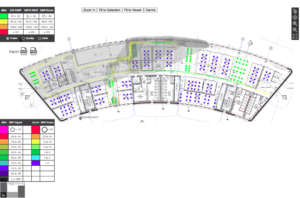
    How do we decide on whether the 5G coverage we need is up to scratch? Well first up it is no longer just about the radio signal power level. That is still important, as is the signal quality but there are two other crucial factors that have to be taken into account. One is the data rate, both uplink and downlink, and the other is the responsiveness of the service which is the lag and latency aspect. Our friends at SignalScore have worked on a service that combines these crucial elements into one single score which can be modified for the particular use case in question. We think that this is a major breakthrough for users to be able to go and get a SignalScore for one or all of the buildings that the service is needed for.

    SignalScore has developed an easy-to-use service which allows anybody to walk test 5G coverage in their own office, factory, warehouse, mall, shop, restaurant, pub. Knowing the signal score allows more educating buying by understanding which service provider is proving the coverage you need in the building you need to use it in. It is perhaps most valuable though for those people investing in high end expensive IoT services being used for e-health, transport and logistics, smart networks, robotic, retailing, and smart manufacturing. Of course, outdoor coverage is equally important and SignalScore will measure that too.

    The concept is simple, anyone with no training can walk around the site and instantly see this scored for the three main attributes required for good 5G services.

    walk round 2

    Operators themselves can do the same testing as well and this will help them make investment decisions on how to provide excellent in building 5G coverage to their most valuable customers. The main benefit for operators is that this service can be used as an effective filter to help them decide when a full inbuilding survey may be necessary, saving many thousands of pounds per year on unnecessary full engineering surveys.

    To go back to where we started, coverage wars are back again, and the battlefield has already been defined. We don’t think we will be seeing the return of coverage maps but we do expect to see a more demanding and better educated buyer of 5G services emerging, putting pressure on service providers to up their game and to rise to the new challenge of 5G in building excellence.

    If we can help you get to grips with making sure the 5G coverage you need is fit for purpose why not get in touch with us here.

    About SignalScore

    SignalScore has a vision to enable competitive and secure wireless experiences for consumers and businesses around the world.

    Find out all about it here.

  • ICT & Life with Covid-19

    In common with the vast majority of people the 2020 that’s unfolded since February has been subject to the three U’s: unpleasant, unexpected and unprecedented. Watching Covid-19 impact our society, health and global economy has the drama of a ship hitting an iceberg, agonisingly slow but with only one prospective outcome. Beyond the lives sadly lost there’s certain to be a legacy in our society, how we conduct business, and for the purposes of this article changes in the ICT industry of which we’re part.

    But we shouldn’t have been that surprised? Should we? Really? Nassim Nicholas Taleb published Black Swan back in 2007 (1), it was a very popular business book (which I actually read, rather than it just collecting dust on the shelf!), reminding us that unexpected events while unlikely and unpredictable can have extreme consequences. How many risk registers did I dutifully compile at work, while all the time not actually addressing or mitigating the underlying risk? As managers, board members and business leaders we have a duty to immediately review and update our risk assessments and act to build more robust businesses. Currently our customers, shareholders and staff viscerally understand risk and now’s the time to make our companies more ‘anti fragile’ (2). Planned mitigations for an extreme denial of service attack, such as we saw with Travelex (3), or a catastrophic hacking of Microsoft 365 or Android would be high on my list, and I would insist on appropriate preparatory work.

    Building on risk management, ICT is now perceived as truly critical infrastructure.  For service providers working under government licence we should anticipate a smart and thoughtful government to insist on greater network robustness given the critical importance of ICT as a public good. A smart and thoughtful ICT industry would actively promote these credentials. In parallel a debate will continue as to the importance of our critical infrastructure being independent of Chinese economic policy. A forward looking solution may be to embrace the power of open source with companies such as Rakuten (4).

    Covid-19 has certainly created some wins for the ICT industry. A super graphic from Fortune magazine (5) recognises Amazon, Apple and Microsoft as three winning stocks from this crisis, and we all wish we had invested (and then sold) Zoom stock, which predicts a doubling of 2020 revenue to somewhere about $1.8 billion. Further as Bill Best mentioned in a previous blog (6) ‘voice is the new killer app’, who would have guessed? However while we have rays of sunshine ICT spend by enterprise will unavoidably track the general economic down turn (7). As a final observation one ICT insider said to me; “at least we didn’t have the cost of GSM Congress in Barcelona to bear, so there’s been some savings!”.

    For the lucky white collar many Covid-19 has meant working from home. While I count it as a personal pleasure that I haven’t had to schlepp around the M4 and M25 since February two homeworkers trying simultaneously to run video conference calls has strained our home ICT infrastructure. Network infrastructure is in the wrong place. Capacity is elsewhere. A legacy of Covid-19 is likely to be a network re-planning with more capacity in the suburbs. The CTO community has been party to many slide presentations covering smart networks, self healing networks, intelligent networks and the like. Now may be the perfect time to position with the board a network evolution encompassing the change in geographic usage.

    Customers may well pay for an honest high quality service, as opposed to the dishonest throttled data offering many of us are suffering today. With a legacy of significantly increased home working security offerings (without the obligation of virtual private networks) will also be essential. In parallel with security surely we can do much to improve upon the foundation of Teams, Zoom and Webex. As a colleague put to me: “My biggest observation is that although video conferencing is a vast improvement on pure voice, it simply struggles when you are trying to brainstorm, negotiate or create common purpose. I can’t quite put my finger on whether it’s limitations of technology and home working techniques/tools or whether it’s actually that humans are hugely complex and clever communicators. I suspect it’s a bit of both ….”, we have now proved that we have no need to travel to work every day and that remote working is fantastic for the majority of circumstances. However I also think we have learned to really value personal interactions (socially and work) and that for certain activities there is no substitute for a chat. Lastly, can we expect to see ‘access to fast internet’ on the prospectus of a house sale, and any buyer insisting on an internet speed check? Perhaps the new middle class must have, as well as a guaranteed Ocado slot and a wash room immediately entering a house, is superb internet access.

    In parallel with continued homework a reduction in demand for fixed office space and fully virtualised business ICT solutions will also continue – with my office phone being as anachronistic as my office desk. Currently the office phone is just a liability certain to be incorrectly call forwarded and a health hazard to boot.  In the small survey of colleagues, one FD will be serving notice to their landlord, another Director is downsizing and nobody is taking extra seats. However there is an active debate as to how to maintain and enhance sharing, coordination and group work which leads to a conversation about the right sort of co-working space (8).

    We must learn from this pandemic. Our industry has seen to have contributed positively and with maturity in the face of this crisis – our task now is to convert that goodwill into a set of actions, plans and ultimately physical network architecture that makes our businesses robust and excellent for our shareholders and the wider stakeholder community. At Azenby, as seasoned ICT professionals, we would be delighted to define, support and engage in the projects that naturally lead from this article.  Good luck in the meantime!

    1. https://en.wikipedia.org/wiki/Nassim_Nicholas_Taleb
    2. https://en.wikipedia.org/wiki/Antifragile
    3. https://www.bbc.co.uk/news/business-51152151
    4. Economist 8th April Edition https://www.economist.com/business/2020/04/08/america-does-not-want-china-to-dominate-5g-mobile-networks
    5. https://fortune.com/2020/05/14/fortune-500-ceo-survey-coronavirus-pandemic-predictions/
    6. Bill’s Blog https://azenby.com/news-and-views
    7. https://www.wsj.com/articles/it-spending-forecasts-take-a-hit-as-coronavirus-slams-global-markets-11583963714
    8. https://www.forbes.com/sites/danestangler/2020/04/03/here-are-three-reasons-covid-19-makes-coworking-spaces-even-more-important/