
Tag: 5G

  • Mobile World Congress 2017

    Mobile World Congress 2017

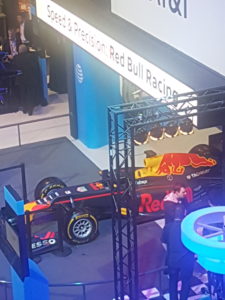
    It was, we are told, the biggest yet and the number of attendees exceeded 100,000 for the first time this year. The show just seems to get bigger and bigger each year and there is talk of another day being added to the programme for next year.  The show coincided with Formula 1 testing also taking place in Barcelona and one could be forgiven for thinking we had stumbled into the wrong venue such were the number of racing cars on display here at MWC. Come to that, the number of top range cars sitting in the exhibition could even have convinced me I was at the Geneva Car Show.

    MWC2017 1MWC 2017 4

    There were plenty of cars on show this year!


    This is the big clue of course as to why this event is getting bigger and is now so much more than just a mobile technology trade show. The connected car, city, world, and the evolution-come-revolution of IoT and Virtual or Augmented Reality (and a bit of Artificial Intelligence, but not much) means that just about the whole world now sees this extravaganza as being about the digitally connected future. It’s now Digital McKinsey and Digital Accenture and companies like Bosch showing us where the chips go in the freezer and of course how to use our Bots and PANs. This connectivity is being called the 4th Industrial Revolution.

    Whether it is your private area network or just your chance to network with real people it seems the events main attraction is still about personal and business networking. Presentations are made, bottom lines are haggled over and deals are done. I’m told by those in the know that really big deals get sealed here at MWC and we are in the age where it really is mobile money that makes the world go around.

    Thankfully, 6G was rarely mentioned. There appeared to be a realism about the challenges in deploying 5G, both technically and, rather worryingly, from a business case perspective. Claudia Nemat, Deutsche Telekom’s new Chief Technology and Innovation Officer said the problem is in identifying user cases for 5G. We have been here before of course and it does make me wonder just how many operators have been able to tick the box on payback on 4G investment before they start all over again with 5G. The absence of a sound business case hasn’t stopped investment in the next generation before of course and will 5G be any different? Perhaps a much tougher stance will be taken on the approach to 5G investment. Sunil Bharti (more from him later) said “Revenue is tapering off, and down to single low-digit figures, which is unsustainable in a capital intensive business,” going on to point out that although something like $200 billion per year of capex was being expended, the return on capital employed was in the single low-digit figures. “You may as well put the money in the bank and go and play golf.”

     

    MWC 2017 8

    I do sense a distinct difference in approach and optimism about 5G between Europe and that in Asia and North America. The latter seem to be far more aggressive and confident about 5G. Europe still seems to be unsure. It seems in Europe there is lot of work to be done in convincing operators that 5G will be a commercial success and mobile operators in Europe seem to be taking a less adventurous stance than many of their governments and regulators, who all want to see their country as the world leader in 5G, even if most of them, and especially in Europe, have a very strange way of going about it.


    There was an IoT show going on within the MWC show. Big numbers of connected devices are bandied about and the essential ecosystems are emerging but are far from complete. In taking a look into the prerequisites for IoT, one didn’t come away thinking that 1Gbps data speeds were the crucial element. Far from it, there were very few IoT applications being demonstrated here needing anything like that kind of data speed. There was more emphasis on latency, in-building connectivity, billing mechanisms and of course security. An IoT world will need a new approach to security if it is to be successful. There is pretty much wide agreement on this but in truth, very little evidence of a radical new approach being demonstrated and too much stretching of conventional thinking. The real breakthrough in IoT security remains the big goal for someone.

    If IoT is the promise of the future than what we used to call OTT is the reality of today. Increasingly it is the major applications that grab the headlines and dominate the key note speaker slots. Filling the auditoriums this year was John Hanke talking about Pokémon GO (it has accounted for 4,500 TB of data since its creation – wow!), Reed Hastings from Netflix and John Martin from Turner to name just some.

    The audience is still mainly made up of operators in these keynotes and the Q&A that follows them always has a recurring theme, ‘how do operators make money?’ and ‘are you the operator’s friend or enemy?’ The underlying grievance behind these questions hasn’t changed. It’s us (MNOs) who make the huge investment in infrastructure, pay huge spectrum licences, employ lots of people and pay taxes; but it’s you guys making all the money. I am always intrigued and fascinated by the response from the OTT industry. Most of them have to stop and think about the answer because it’s not something they have ever felt the need to concern themselves with – and why should they! Your problem, not mine.

    This brings me round to thinking about business models for MNOs and the need for them to evolve. I can see some evidence of that happening already. Exploiting verticals with the right partners is an obvious choice and this means finding both the right sector expertise and a system integrator. Creating ecosystems in new verticals is one way for MNOs to counter the ‘dumb pipe’ challenge. Orange are making an impressive success of their banking services for their customers. Could this extend beyond their own base one day? That would be interesting to see. Many operators are looking at content and how to provide premium and live content to their customers. Content as the next gold rush was a sub-theme at the show. The argument here is that customers perceive value in the content they watch, not in the access they use.

    Not surprisingly, many operators are talking about their transformation programmes and the CTO of today is now the Chief Transformation Officer. Getting fit for purpose for the digital economy and the connected world is encouraging operators to think about these new business models. VimpelCom announced at the event that they have rebranded themselves and are now called Veon and their business is not about infrastructure any more but about being a digital technology company. It seems that whether by choice or by necessity, mobile operators are determined to break out of their Telco mould. MWC 2017 may have been the tipping point towards a new era in which we will have to start classifying mobile operators differently and the days of them all looking the same with the same business models are changing fast. We wish them well as they boldly go where no MNO has gone before!

    We could not finish this review of MWC 2017 without going back to day one and the opening keynote speech from new GSMA Chairman, Sunil Bharti Mittal, who of course is also the Founder and Chairman Bharti Enterprises who own and run Airtel. To say he caused a stir on opening day would be an understatement. “I can promise you, during my term at the GSMA, roaming charges will be a thing of the past,” he told us all. The driver seems to be not so much about offering a better service and better value for money for international roamers but more to do with the stigma of the reputation indices showing mobile operators as “trending just above the tobacco industry”.

    Azenby-HT-Passport-400px1-wpcf_220x220We have commented on our pages many times before about the irony of industry insiders visiting the world’s premier mobile trade show and getting onto WiFi as soon as they can and putting their mobile phone on standby. The reason has of course been the roaming pricing strategies adopted by MNOs which have successfully persuaded us all not use the roaming service. Maybe the fightback starts here. We at Azenby will be following this very closely to see how this develops in the coming months.

    That’s the end of our quick tour of MWC 2107. I hope you enjoyed it. Please let us know and let us have your comments and feedback in the box below and if Azenby can help your business in seizing the new opportunities that lay ahead, please do give us a call.

  • Will Small Cells become Big?

    Small Cells have been a talking point for many years now. There was a time some years back when they seemed to be the next hot topic, the Small Cells forum was born and everyone was talking about small cell solutions. I often wonder what makes small, small and whether small will become big!

    What do I mean by this? Well when small cells became the hot topic, MNOs were actually already doing small stuff – small footprint cells from a radio coverage perspective using small footprint equipment, small structures (such as mock lighting columns) and smaller capex budgets than what are required for a big macrocell – in fact they were rolling out microcells. Was this the birth of the small cell? Microcells were (from a classical radio coverage perspective) supposed to be a lower level of coverage, below the surrounding building clutter and hence providing street level coverage over a more limited area that a macrocell. Some MNOs in the UK found a loophole in the requirement for paying rent on highways land and hence a proliferation of mock lighting columns happened. I recall being part of the design team who created the whole “Lamp post site” concept with a major UK MNO and was somewhat surprised as to how over time many MNOs morphed these designs into ever larger structures and equipment cabinets and the term “Mini Macro” started being bandied about. It felt like the microcell had an identity crisis; it had been on steroids and grown bigger than intended! Some of this was driven by the economics of the solution, no ground rent, smaller capex than a full blown macro and the ability to push the design to achieve larger coverage footprints meant the MNOS wanted to squeeze maximum bang for buck from the designs and the associated capex budget.

    Then came the Small Cells fervour and a lot of pundits thought that MNOs would be deploying Small Cells en-masse. It was easy to see why – many areas had been saturated with macrocells, some microcells had also been deployed and with increasing demands for higher bandwidth services and the associated capacity required to serve them it seemed logical that another layer of cells would appear below the macro and micro ones. “Ah a picocell” I hear all you die hard radio planners say – well yes, this classic layered vision of the radio network had been around for a while and it was expected that picos would follow micros in the layered rollout vision. In fact I recall going to Finalnd to see a new product from Nokia (before the NSN and the new Nokia days) that was specifically built to serve the pico market it was called “Insite” and I thought it was rather a good concept unfortunately despite the impressive investment in a mass production facility in Finland the product had limited functionality and as anyone who has worked in a radio engineering function will know, us engineers like our functionality. Anything below the required GSM/GPRS/EDGE/UMTS/HSPA/HSPA+/LTE/LTE-A functionality is seen as a little undesirable by the engineering fraternity. The Insite was a GSM only non-EDGE capable base station at a time when data was started to become a reality on mobile networks. Due to lack of demand the rather cute A4 sized Insite was put to bed, never to be woken again.

    Now I’m not having a good at Nokia here, the other vendors were also considering or doing similar things but there is a theme emerging regarding what MNOs demand from a product and how that impacts the cost of providing a picocell or small cell that meets their requirements.

    Why does this matter? Well picocells have competition, there’s a another guy on the block whose been around for a while, somewhat seen as a sideshow by the MNOs for some time but becoming an increasingly serious contender for the small cell crown – Mr Wi-Fi Access Point, already rolled out en-masse and offering data services to cellular customers all over the world.

    “It’s not a small cell” I hear the dissenters shout – “it’s not cellular, not part of the cellular network layers, an outsider incapable of mobility, data only, out of step with radio network equipment functionality, can’t be monitored as part of our network management systems…….” Well I would agree based on those arguments but based on the need to provide a small footprint of coverage to a dedicated location allowing customers to access data services from their cellular devices I would disagree – Wi-Fi access points are already out there providing “Small cell” type coverage.

    I went to a base station themed conference in Bristol UK in 2012 and there was still a lot of talk about small cells, in addition there was a lot of discussion about “HetNets” – Heterogeneous Networks with lots of different spectrum bands, technologies and cellular layers needing to be glued together seamlessly to offer customers coverage, capacity and functionality where they needed it. Nothing wrong with that I say, but the small cell layer had still not emerged in the real world as seen by the visions of the presenters. I didn’t see a lot of people presenting on cellular small cell rollout success stories. What I did see was O2 presenting the success of their Wi-Fi network rollout in London particularly around Oxford St, Exhibition Rd and Trafalgar Sq. plus Virgin Media talking about their London Underground Wi-Fi deployment. Don’t get me wrong full blown cellular technology small cells were also being discussed and presented but very much in the trial phases.

    OK this is a few years out of date but in the same year some commentators were stating that Small cells would account for 88% of all mobile base stations by 2016. I’m not convinced, even now – I’m still not seeing mass rollout headlines for small cells of the cellular kind. My ex colleagues in the MNO world do not appear to be planning large pro-active small cell layers across all their most populated areas of coverage. “What about AT&T?” I hear you shout “they were expected to deploy 40,000 small cells by 2015” – I haven’t seen mass publicity about progress on this initiative, it’s not easy to find.
    Meanwhile that lean and mean Mr Wi-Fi Access Point continues to stride on emerging everywhere and anywhere – even my local Sainsburys is offering free Wi-Fi which makes it convenient for the budget conscious shopper when checking the price of a toaster at Argos compared to their special promotion………..but I digress.

    So what does this mean anything, nothing or something? Well I haven’t got a downer on full blown cellular small cells there is indeed a place for them but it feels like the small cell is suffering a bit like our Microcell on steroids – it has an identity crisis. Is it cellular or Wi-Fi or both and which identity should it adapt to become big?
    This is a complex issue (as all techies like to say) there may still be a wave of pro-active small cell deployments by the MNOs especially now the likes of 2600MHz spectrum is in their hands – an ideal spectrum band for small cell / hot spot coverage deployment. However practical challenges remain.

    First and foremost location – as any homebuyer knows, location is key; the same applies to a small cell deployment. The fact is if you are using your small cell to soak up demand driven by your consumers then in today’s world of high bandwidth consumption they are generally located in a specific area sat streaming the latest episode of Game of Thrones or catching up on The Great British Bake Off in HD. OK so just put the small cell where they are then: simple to say but less so to do. A lot of this consumption is in cities in areas where there also happens to be a lot of retail and service industry presence – big brand names in desirable looking spaces or trendy boutiques in fashionable streets. So what? Well if you want shop front space in Bond Street expect to pay in excess of £900 per square foot – very nice for the landlord. Cue Mr MNO knocking on landlords door asking if they can come and drill the walls and mount base station, antennas and cables, disrupt the retail space, put something ugly on the face of the building (with a H&S warning about radiation on it) and pay a pitiful amount for rent. Oh you also need the local authority to approve you destroying the look of that nice regency façade with a bit of telecom’s kit. Guess what – you can’t get the Small Cell where you need it, you might be able to find another property a bit further away but then you are not quite covering the hot spot you need to.

    In addition to being able to get the small cell exactly where you want it, you then need to connect it to your mobile network. You’re in a high demand area so you need a good sized backhaul solution, no line of site for a microwave transmission solution due to the environment so it’s a fixed line solution with similar pricing to a full blown macrocell leased line. OK I could try and use a non-line of site microwave solution but again – I get the feeling these solutions are limited in number in the real world.

    Then there is the cost of the equipment. The engineering functions in the MNOs want a fully standards compliant small cell – a big stamp of 3GPP compliance and all the mobility and radio functionality expected. Fair enough that is their job but compare that to the required functionality for a Wi-Fi Access point and the associated cost and you have another headache to contend with – how do you justify the cost of the equipment.
    So as an MNO you are struggling to locate your (cellular) small cell so you may not cover the area you need to, the transmission cost is relatively high and your equipment price point is way off compared to a WiFi Access Point – Is this good bang for buck for your capex?

    Meanwhile the tenant in the retail space has brought some Wi-Fi access points, plugged them into the internet and started offering service to their clients.
    Maybe I’m sounding like a fully paid up member of the Wi-Fi Alliance but frankly I have no bias either way. I accept that there are other variants of small cells that are a bit easier to deploy such as Femtoc ells that can be plugged into the internet for connectivity and look very much like a Wi-Fi Access Point but I guess I am trying to make a point about mass small cell deployment. The reality is that there are many challenges to small cell deployment of the traditional cellular kind as articulated above and whilst the MNOs have been struggling to justify a proactive small cell rollout, leaner and meaner Mr Wi-Fi has sneaked round the back and got all the customers, hell some landlords are even making sure they get Wi-Fi to ensure users of their premises get what they want – coverage wherever they are.

    Whilst the MNO engineers continue to demand functionality from their small cell providers that is absent from Wi-Fi pushing the price point and complexity up, their network end users are happily using a much lower spec, lower price point, less functional solution because it gives them the hot spot data coverage they need. Allied to that the next generation of Wi-Fi access points are coming supporting radio functionalities such as Multi-User MiMO giving multiple users much higher data rates thus meaning Wi-Fi will continue to be the sole source of data coverage in many areas as consumer demand for bandwidth increases. Add to that Wi-Fi calling capability and suddenly you have a Wi-Fi solution that directly competes with your cellular small cell. Oh and you don’t get stung with data roaming charges when you use Wi-Fi solutions abroad with the many Free Wi-Fi services on offer.

    One other issue that also contributes to the consideration of whether mass small cell rollout will become a reality is the very prudent practice of MNOs sweating their assets to the maximum. Having spent a fortune rolling out a macrocell network you want to make sure you get every available improvement possible from this network before you start rolling out another one. With the advent of lower band spectrum for LTE and techniques such as Carrier Aggregation (CA) offering more data throughput and capacity capability one could argue that MNOs will continue to try and cover those urban areas both indoors and outdoors with their existing macrocell base. The superior in-building penetration of low band spectrum and the improved data capabilities of CA could stave off the need for small cells just a while longer. Remember that MNOs are already companies with a high operational gearing and the addition of many hundreds of small cells just makes their operational challenges and cost base look even more scary than today – a time when MNOs are seeking to reduce site Opex costs through network sharing, not add to them with another major rollout!

    So what’s the answer to my question – will small cells become big? I personally believe that from a Wi-Fi perspective they already are and will continue to get bigger but from a full blown cellular solution perspective there is still some way to go. If we believe the forecasts for data use and the need for very high bandwidth and ultra-low latency services there is no doubt many areas will need improved quality of coverage and capacity and it may be that the only way to achieve this and fully optimise it is with more, smaller cells (of the cellular variety!) connected to fibre backhaul and located closer to the end user.
    There will always be practical challenges to deployment of any technology but I think the MNO and vendor community needs to consider what they think the end user needs and what end users are actually using as a solution today. Maybe a marriage of Wi-Fi and cellular is required with a fully open and functional relationship to really make MNOs end users and the Wi-Fi community benefit from the future of small cells. I don’t mean Cellular and Wi-Fi technologies sat together in one box either I mean a fully interoperable Wi-Fi/Cellular networking solution.

    There are hints that 5G will deliver this kind of Multi Radio Access Technology, multi-layered interworking across licensed and un-licensed spectrum and vendors continue to talk about the need for ultra-dense networks with many small cells to enable users to get the throughput and latency required for next generation services.

    However all this is just theory if you can’t get over the deployment practicalities and constraints and your cellular small cell solution price point. Much as the techies would love to roll-out masses of small cells, the truth is MNOs have limited capex and will continue to only do what is essential to keep up with the market; any mass small cell rollout programme will need the CFOs sign off, in no way an easy task in the current financial environment….